Medical equipment management: inventory, PM and calibration
Asetavo is medical equipment management software for the teams who keep devices safe to use. Keep one inventory of every infusion pump, monitor, defibrillator, bed and wheelchair by ward and room, plan preventive maintenance, record calibrations and lend shared devices between wards, all on the same record.
It is scan-based: labels and phones, plus RFID readers where you want them. No positioning infrastructure, and no patient data.
Free plan for the register · Maintenance and calibration on Business · USD pricing
What medical equipment management software covers
Biomedical teams need four answers about every device: where it is, who has it, whether it is in date for maintenance and calibration, and what has been done to it. Asetavo keeps all four on one record.
A complete device inventory
One record per device: make, model, serial number, asset tag, ward, room, custodian, status, condition, photos and documents.
Preventive maintenance
PM and inspection schedules per device or per model, a due list for the week and work orders with parts, labour and downtime.
Calibration records
Result (pass, fail or adjusted), standard, certificate reference, technician and the next due date on every calibration.
Loans between wards
Check shared pumps, monitors and wheelchairs out to a named person with a due date, and back in with their condition.
Last-seen location
The ward and room where each device was last scanned, or last read by an RFID reader at a door or store.
History you can show
Every move, service, calibration and edit on the device’s timeline, exportable to Excel or CSV.
Equipment inventory by ward, room and department
Devices move. A pump starts in ICU, follows a patient to theatre and ends up in a sluice room. The inventory has to follow it, and anyone should be able to update it with a scan.
Mapped to your hospital
Model the site as a location tree: hospital, building, department, ward, room and store. Each device sits in one place on that tree, and every move is recorded.
Tag once, scan anywhere
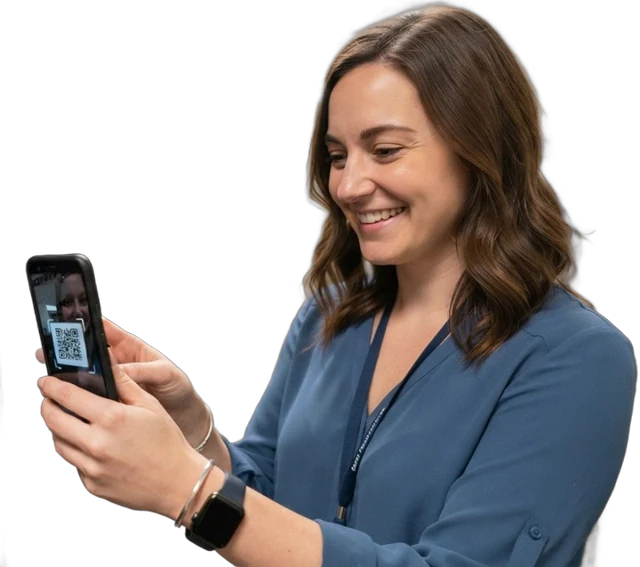
Put a QR or barcode label on each device, or keep the asset numbers you already use. Any nurse or technician can scan it with a phone to open the record.
Import your current list
Bring your biomedical inventory in from Excel or CSV with the import wizard. Missing categories and locations are created as you import.
Preventive maintenance and work orders for biomedical teams
Maintenance lives on the device, not in a separate system. The same record that shows where a device is also shows its PM schedule, open work orders and service history. More on maintenance and CMMS.
Schedules by device or model
Set preventive, inspection or calibration schedules for one device or a whole category, every so many days, weeks or months, with lead days.
A due list for the week
Due and overdue maintenance is listed in one place. Generate the work order from the due list when the team is ready to do it.
Work orders with cost and downtime
Corrective, preventive, inspection and calibration jobs, each with priority, assignee, parts, labour, vendor and downtime on the device.
Set a device to In Repair while it is out of service so clinical staff can see it should not be used, and back to In Use when the work order is complete.
Calibration records and next-due dates
Calibration is a work-order type with its own record. That keeps the due date, the result and the certificate together, instead of in a shared drive that nobody checks.
Calibration written on completion
Completing a calibration work order writes the calibration record once, with its result, standard, certificate reference and technician.
Next due date rolls forward
The schedule moves to the next due date, so the due list always shows which devices are coming up for calibration.
Certificates on the device
Attach the calibration certificate or the service report to the device record as a PDF, image or Office file.
Calibration tracking software →
Check shared devices in and out between wards
Shared equipment drifts. Run your equipment library with check-in and check-out (Growth and above), so every loan has a name, a due date and a condition record.
Issue to a person, not a ward
Check a device out to a named nurse, a ward contact or a technician, with a due date and its condition when it leaves.
An overdue list
Loans past their due date are flagged on the Overdue tab, so the equipment library knows who to chase. This is a list you check, not a push notification.
No double issuing
A device that is already out cannot be issued again, and it cannot be disposed of until it comes back.
RFID portals and last-seen location, not RTLS
Real-time location systems need positioning infrastructure across the building. Asetavo takes a simpler approach that answers “which ward is it on?” for most devices: every scan records where the device was, and on the Business plan, UHF RFID readers at ward doors, theatres and stores record tagged devices as they pass.
You see the last place a device was scanned or read, with the time, and you can raise an alert when a tagged device leaves its zone. It is not continuous indoor positioning. See RFID readers and zones.
Audit-ready history per device
Each device keeps its full timeline: when it was received, where it has been, who borrowed it, every PM and calibration with its result, repairs with parts and downtime, and its disposal. Edits are attributed to the signed-in user.
To verify the inventory, run a scoped stock-take per ward or store with asset audit software (Growth and above): scan what is there and get a list of missing, misplaced and unregistered devices. Export any report to Excel or CSV for your quality or finance team.
Plans for medical equipment management
Maintenance, calibration, UHF RFID and readers are on Business. Loans and audits start on Growth. Build the inventory on the free plan first if you like.
| Plan | Price (USD) | Assets | Users | Tags | Adds |
|---|---|---|---|---|---|
| Starter | Free | 100 assets | 2 users | QR & barcode | Core asset register, QR & barcode tags, Mobile scanning, iOS & Android app (coming soon), Basic reports |
| Growth | $46/mo | 500 assets | 10 users | QR, barcode & NFC | NFC tagging, Check-in / check-out, Asset audits, Stock-takes, Custom fields |
| Business | $83/mo | 5,000 assets | 25 users | All incl. UHF RFID | UHF RFID, RFID readers, Zones & movement alerts, Site geofence alerts, GPS trackers (live position) |
Annual billing is 10× the monthly price (two months free). Prices exclude taxes. See every feature by plan on the pricing page.
How biomedical teams roll it out
- 1
Start with one device class
Pick the devices that go missing or fall behind on PM most often, such as infusion pumps, and one department.
Start free → - 2
Import and tag
Import your current list from Excel or CSV, then label each device as it passes through PM or the equipment library.
Asset label generator → - 3
Load the schedules
Add PM, inspection and calibration schedules by model or by device, and let the due list drive the week’s work.
Maintenance (CMMS) → - 4
Count and extend
Run a scoped stock-take per ward to confirm the inventory, then add more device classes, wards and, where useful, RFID readers.
Asset audit software →
Looking at the wider hospital picture, including RFID at ward doors and zone alerts? See hospital equipment tracking software.
Bring every medical device into one register
Import your biomedical inventory, label devices as they pass through PM, and keep calibration on the record.
Tracks equipment, not patients · Excel and CSV export on every plan