Asset Management Glossary
Clear, practical definitions of the terms you meet when tracking, tagging, auditing, maintaining and depreciating physical assets — with worked examples where the numbers matter.
A
B
C
D
E
F
G
H
I
L
M
N
O
P
Q
R
S
T
U
V
W
Z
Where most people start
The terms asset, operations and finance teams look up most — each with an in-depth explanation and examples.
 RFIDRFID (radio-frequency identification) uses radio waves to read a unique ID from a tag without line of sight — often many tags at once, at a distance.
 Asset registerAn asset register is the master list of every asset an organization owns, with its ID, location, custodian, value, status and history.
 DepreciationDepreciation spreads the cost of a fixed asset over its useful life, recording part of the cost as an expense each period as the asset is used up.
 QR codeA QR code is a square 2D barcode that any phone camera can scan — the cheapest, simplest way to label an asset and open its record.
 Stock-takeA stock-take is a physical count of assets (or stock) compared against the register, to find what is present, missing or unrecorded.
 NBVNet book value (NBV) is an asset’s cost minus its accumulated depreciation (and any impairment) — the value it is carried at on the balance sheet.
 Preventive maintenancePreventive maintenance (PM) is planned service done at set time or usage intervals to reduce the chance of failure, rather than waiting for a breakdown.
 CMMSA CMMS (computerized maintenance management system) organizes maintenance around assets: work orders, PM schedules, parts, history and reporting.
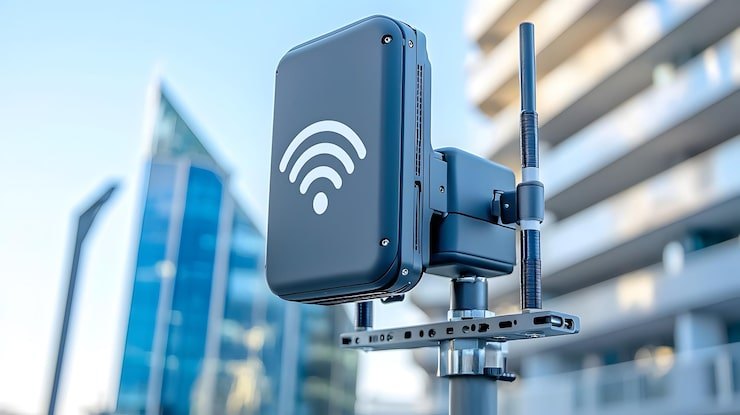 UHF RFIDUHF RFID is passive RFID in the 860–960 MHz band, read at several meters and in bulk — the standard choice for fast audits and doorway detection.
 Zone-exit alertA zone-exit alert is a real-time notification triggered when a tagged asset is detected leaving a zone it is supposed to stay in.
 Straight-line depreciationStraight-line depreciation charges the same amount each period: (cost − salvage value) ÷ useful life. It is the simplest and most common book method.
 Asset trackingAsset tracking is recording where each physical asset is, who has it and what state it is in — using tags, scans and readers to keep that record current.
From tag to balance sheet
Asset management sits where operations and finance meet. The same laptop has an EPC, a custodian, a zone, a service history and a net book value — this glossary covers all of them.
- Asset Management11 terms
- Tracking11 terms
- Tags & Identification14 terms
- Inventory & Audits9 terms
- Maintenance11 terms
- Finance19 terms
- Security & Access6 terms
Go beyond definitions
Step-by-step guides, articles and free tools that put these terms to work.
Know the terms? Now run them in one place.
Asetavo brings the asset register, QR/barcode/NFC/UHF RFID tagging, zones and alerts, check-in/out, audits, maintenance and depreciation into one platform. Start free on the Starter plan.
Ready to account for every asset?
Tag, track and audit everything you own — from a handheld scanner to a boardroom report.
No card required · Workspace ready in minutes · Simple USD pricing