Asset management software for US organizations
One cloud fixed asset ledger for US teams: tag equipment with QR or RFID, run the physical inventory by building and room, and keep GAAP book depreciation and MACRS tax depreciation on the same record. Priced in US dollars, with a free Starter plan.

Fixed asset ledger, physical inventory, capitalization threshold: the words US buyers use
American finance teams say fixed asset ledger or fixed asset subledger, not register. Operations people call the annual count a physical inventory, and public-sector controllers talk about capital assets. The vocabulary differs by desk, but the underlying records are the same, and Asetavo keeps them on a single asset record.
| US term | Typical meaning | Where it lives in Asetavo |
|---|---|---|
| Fixed asset ledger / subledger | Every capitalized item with cost, placed-in-service date, method and accumulated depreciation | The asset register, with a book profile and an optional tax profile on each asset (Business plan) |
| Physical inventory | A periodic count that proves the ledger matches the floor | An audit session scoped to a site, building, floor or room (Growth and above) |
| Capitalization threshold | The dollar amount above which a purchase is capitalized rather than expensed | Your policy; items below it can still be tracked as non-capitalized assets for custody and loss control |
| Property tag / asset tag | The sticker or plate with the asset number | QR and barcode labels on every plan, NFC on Growth, UHF RFID on Business |
| Equipment checkout | Lending laptops, tools or AV gear to a named person | Check-in and check-out with due dates and condition (Growth and above) |
MACRS, Section 179 and why book and tax figures differ
IRS Publication 946 is the federal guide to depreciating business property. It states plainly that you must use the Modified Accelerated Cost Recovery System (MACRS) to depreciate most property, and it explains how a business can elect a Section 179 deduction instead of depreciation for certain property, alongside the special depreciation allowance often called bonus depreciation.
That is why most US companies keep two schedules: straight-line under GAAP for the financial statements, and MACRS for the federal return. In Asetavo each asset can carry a book profile and a separate MACRS tax profile, so the cost and placed-in-service date are entered once. Section 179 and bonus elections are decisions your CPA makes on the return; Asetavo does not make them for you, but it holds the asset facts those elections are based on.
General information only, not tax advice. Federal limits and state conformity change from year to year; read the current Publication 946 and confirm the treatment with your CPA or accountant.
GAAP book and MACRS tax schedules on one asset
- A straight-line book profile drives net book value; a MACRS tax profile keeps its own running total.
- Monthly runs are computed as drafts and posted only after review.
- Disposals record proceeds and the gain or loss against net book value.
Billed in USD. Starter is free; Growth and Business add the features noted on each section. Compare plans →
GASB Statement 34 and capital asset records for cities, counties and school districts
State and local governments report capital assets under GASB Statement No. 34. The Statement says capital assets should be depreciated over their estimated useful lives unless they are inexhaustible, such as land, or infrastructure reported under the modified approach, and that depreciated assets are reported net of accumulated depreciation.
For a finance director the practical question is whether the capital asset listing can support the year-end rollforward: balances by major class, additions, disposals and accumulated depreciation. Asetavo records the class, cost, in-service date, location, custodian and disposal of each item, so the listing exports to Excel for the auditors and for the notes. Asetavo does not certify GASB compliance; your auditor and your own policy decide that.
School districts, health systems, contractors and IT departments
K-12 school districts
Chromebooks, projectors and classroom technology spread across many campuses, issued to staff and students and collected again at the end of the school year.
Hospitals and health systems
Infusion pumps, monitors and shared mobile equipment move between departments; preventive maintenance and calibration dates sit on the same record.
Construction contractors
Tools and equipment leave the yard for job sites. Check-outs show who has each item, and GPS-tracked equipment shows where it was last reported.
Corporate IT and MSPs
Laptops and peripherals assigned on day one and recovered at offboarding, with a custody history for each serial number.
How a US physical inventory runs in Asetavo
Pick the scope
Start an audit for one campus, one building or a single room, so a large estate can be counted in stages.
Scan
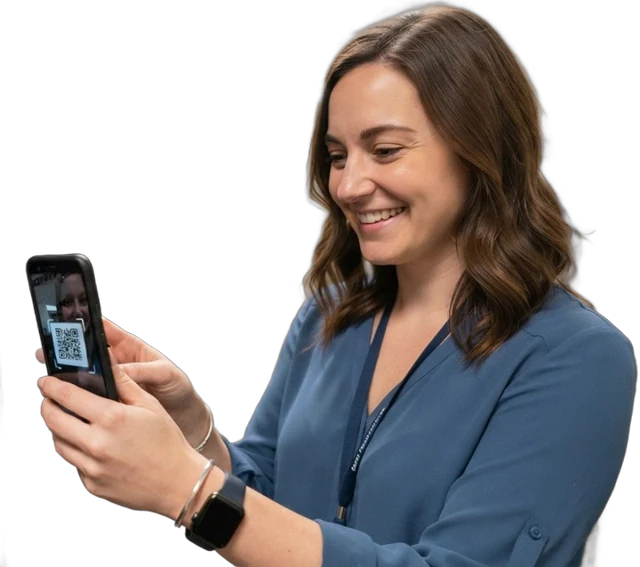
Use a phone camera in the browser, a handheld barcode scanner, or a UHF RFID reader for bulk reads on the Business plan.
Reconcile
Missing, found and unrecorded items appear as variances. Resolve each one as found, still searching or written off.
Close out
Export the variance list and the updated ledger to Excel or CSV for your auditors or grant reviewers.
Comparing US asset tracking vendors
US shortlists usually include Asset Panda, EZOfficeInventory, Sortly and the open-source Snipe-IT. Our comparison pages set out where each fits, using each vendor’s own public information with the date it was checked. Asetavo starts free with QR and barcode, then adds NFC, check-outs and audits on Growth, and UHF RFID readers, zones, maintenance and depreciation on Business.
Priced in US dollars, with no currency conversion
Asetavo plans are priced and billed in US dollars, so for American customers the invoice, the ledger and the budget line all use the same currency. Starter is free with no time limit, which lets a team load a pilot site from an Excel import before anyone raises a purchase order.
Official sources
Tax and reporting rules change. These are the official pages behind the general context above (checked 2026-10-09). They are not tax advice: confirm the treatment of your assets with your accountant or tax adviser.
Asset tracking in other countries
Questions from United States buyers
Ready to account for every asset?
Tag, track and audit everything you own — from a handheld scanner to a boardroom report.
No card required · Workspace ready in minutes · Simple USD pricing